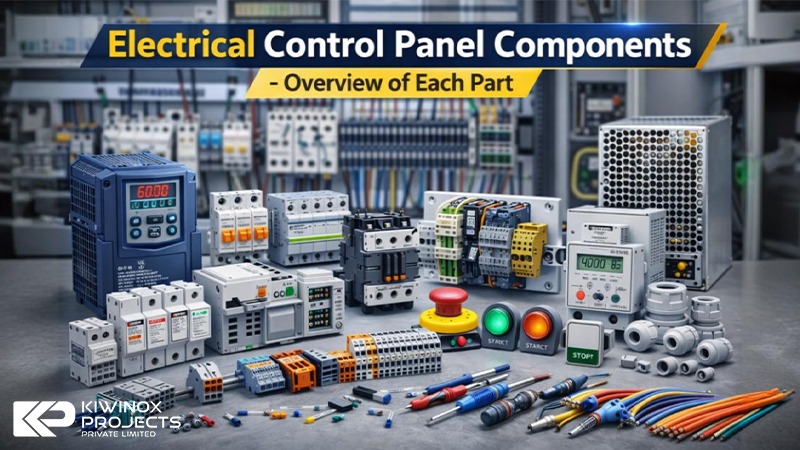
Electrical Control Panel Components – Overview of Each Part
Every factory has a certain rhythm to it — that steady hum of machines doing exactly what they’re meant to do. But behind that smooth operation sits something most people rarely notice. Open an industrial control panel and you’ll see it immediately: structure, logic, precision. This is the nerve centre where machines receive instructions and respond in real time.
Electrical Control Panel Components are far more than hardware mounted inside a metal box. They act as the system’s decision-makers — regulating power, protecting expensive equipment, and keeping operations stable hour after hour. When even one component is poorly selected, the entire process can feel it. This guide walks through the essential parts, how they function together, and why choosing correctly is not something to take lightly. It’s written for business owners, engineers, panel builders, maintenance teams, compliance professionals, and technical buyers who want clarity without the fluff.
What Is an Electrical Control Panel
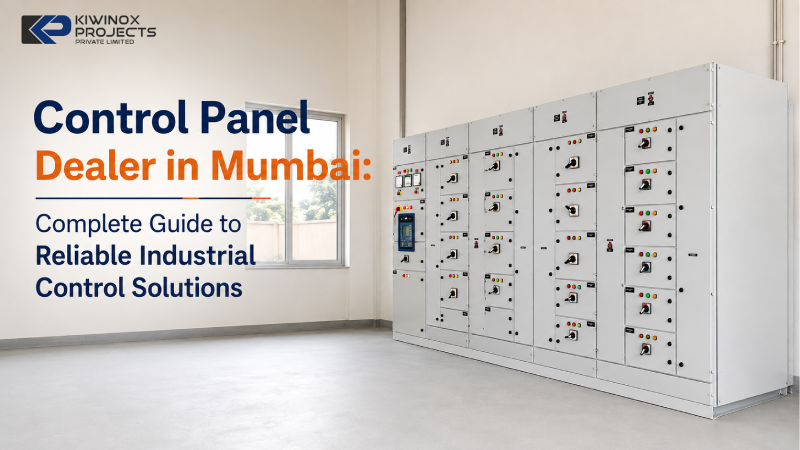
An electrical control panel is essentially the command hub that manages power distribution and machine control within an industrial setup. Inside the enclosure, multiple devices work in coordination to control motors, automate processes, and maintain safety conditions. Without these panels, modern automation would quickly descend into disorder.
At the centre of this ecosystem sit the Electrical Control Panel Components, each designed for a specific responsibility. When every part is correctly specified and installed, the panel performs like a well-rehearsed system. Miss one element, or choose the wrong rating, and the entire sequence can start to unravel.
Why Electrical Control Panel Components Matter
Industrial environments leave very little room for guesswork. Control panels must manage voltage levels, current flow, circuit protection, automation logic, and operator interaction — all at once. A single mismatch in component rating can lead to nuisance tripping, overheating, or even equipment damage.
This is precisely why working with a reliable Electrical Control Panel Components Dealer and Distributor in Ahmedabad makes a real difference. The right supplier doesn’t just provide parts; they help ensure each component aligns with the load requirements, environmental conditions, and application demands. Nothing random. Nothing assumed. Just properly matched engineering.
Main Electrical Control Panel Components Explained
Main Isolator Switch
The main isolator switch disconnects incoming power from the panel. It may look simple, but its role is critical. During maintenance or emergency shutdowns, technicians rely on the isolator to guarantee the system is completely de-energised. One decisive action — but it protects both people and equipment.
Circuit Breakers (MCB, MCCB)
Circuit breakers form the first protective barrier inside the panel. They monitor electrical flow and automatically interrupt the circuit when overloads or short circuits occur.
- MCBs are typically used for low-current circuits.
- MCCBs handle higher loads and heavier industrial duties.
Together, they prevent faults from escalating into serious damage.
Contactors
Contactors act as electrically controlled switches designed to handle high-current loads, particularly motors. When a control signal is received, the contactor opens or closes the power circuit. You’ll find them heavily used in motor control centres and automation panels where frequent switching is required.
Overload Relays
Motors rarely fail suddenly — they usually overheat first. Overload relays monitor current over time and disconnect the motor supply before thermal damage occurs. They’re commonly paired with contactors, forming a quiet but essential layer of protection.
Control Relays
Control relays handle low-power switching tasks within the panel’s logic system. They support interlocking, signalling, and sequencing functions. While small in size, they play a key role in keeping control logic organised and reliable.
Power Supplies
Power supplies convert incoming voltage into the stable levels required by control circuits, PLCs, sensors, and relays. Consistent power is what keeps automation systems predictable. Any fluctuation here tends to ripple through the entire panel.
Programmable Logic Controller (PLC)
The PLC is often considered the brain of the control panel. It receives input signals from sensors, processes them based on programmed logic, and triggers output actions accordingly.
In modern automation environments, PLCs dramatically reduce wiring complexity while improving flexibility and diagnostic capability. When processes need to adapt or scale, the PLC makes it possible without rebuilding the entire panel.
Human Machine Interface (HMI)
The HMI provides the bridge between operators and machines. Through touchscreen displays or interface panels, users can monitor system status, acknowledge alarms, and issue commands.
A clear interface leads to faster decisions and fewer operator errors — something every production floor benefits from.
Terminal Blocks
Terminal blocks bring order to panel wiring. They organise connections, simplify maintenance, and improve overall safety. Without a structured terminal layout, troubleshooting becomes slow and frustrating. With proper arrangement, technicians can identify and resolve issues far more efficiently.
Push Buttons and Indicator Lamps
These components form the most direct human interface on the panel.
- Push buttons enable manual commands such as Start, Stop, and Reset.
- Indicator lamps provide instant visual feedback — power on, fault present, system running.
Simple devices, yes. But absolutely essential for day-to-day operation.
Fuses
Fuses provide fast-acting circuit protection by breaking the connection when excessive current flows. Unlike breakers, they must be replaced after operation. They’re commonly used where rapid isolation is required and fault energy must be limited quickly.
Panel Enclosure
The enclosure is the protective shell that houses all Electrical Control Panel Components. Its job is to shield internal devices from dust, moisture, and accidental contact.
Material selection and IP rating depend heavily on the environment — indoor installations, outdoor exposure, or harsh industrial zones all demand different enclosure strategies.
How Components Work Together
A control panel should never be viewed as a loose collection of parts. It functions as an integrated system. Power enters through the isolator, protection devices monitor safety, control elements process logic, and output devices drive the machinery. Each component supports the next in a carefully balanced chain.
Remove one element — or size it incorrectly — and performance starts to slip. Sometimes slowly. Sometimes all at once
Importance of Correct Component Selection
Improper sizing often leads to overheating, nuisance tripping, or unstable operation. Overspecifying, on the other hand, increases project cost without delivering meaningful benefit. Proper selection depends on load calculations, duty cycle, environmental conditions, and real-world operating behaviour.
This is where experience outweighs catalogue browsing. Working with a knowledgeable Electrical Control Panel Components Dealer and Distributor in Ahmedabad helps ensure the panel performs reliably long after installation.
Applications of Electrical Control Panels
Control panels quietly power operations across multiple industries. Manufacturing plants rely on them for automation and process control. Infrastructure projects use them for power management. HVAC systems depend on them for climate regulation. Water treatment facilities use control logic to manage pumps and valves.
Different industries, different configurations — yet the same core Electrical Control Panel Components working behind the scenes.
Compliance and Safety Considerations
Electrical panels must meet strict standards for labelling, spacing, grounding, and protection. Proper compliance reduces operational risk and supports workplace safety. It also prevents costly redesigns during inspections.
Partnering with an experienced Electrical Control Panel Components Dealer and Distributor in Ahmedabad helps organisations stay aligned with regulatory expectations while maintaining system reliability.
Product Range at Kiwinox Projects Pvt. Ltd
Kiwinox Projects Pvt. Ltd offers a focused portfolio of electrical control panel products suitable for both industrial and commercial applications. The range supports automation panels, distribution boards, and customised control solutions.
Rather than offering generic listings, Kiwinox Projects Pvt. Ltd emphasises compatibility, clear specifications, and practical usability. Each product category is selected with real application demands in mind, helping buyers avoid unnecessary complexity during panel design and procurement.
Why Choose Us
Kiwinox Projects Pvt. Ltd has built trust by staying closely aligned with real-world electrical challenges. The team understands how Electrical Control Panel Components behave under continuous load, elevated temperatures, and demanding duty cycles. As a dependable Electrical Control Panel Components Dealer and Distributor in Ahmedabad, Kiwinox Projects Pvt. Ltd supports customers with consistent product availability, practical technical guidance, and responsive support. Clients value the straightforward approach — no overpromising, just solutions that work where it matters most: on the shop floor. When reliability, compatibility, and informed sourcing matter, businesses continue to choose Kiwinox Projects Pvt. Ltd as a long-term partner.
Conclusion
Electrical control panels quietly determine how efficiently and safely industrial systems perform. Every component — from isolators to PLCs — carries a defined responsibility that contributes to overall system stability. When Electrical Control Panel Components are selected thoughtfully, panels operate smoothly, downtime stays minimal, and compliance becomes far easier to maintain. Kiwinox Projects Pvt. Ltd supports this journey with application-focused products and grounded technical understanding that reflects real operating conditions. For businesses planning new panels or upgrading existing ones, the difference often comes down to component quality and supplier expertise. Choosing carefully today helps prevent costly interruptions tomorrow and keeps operations running exactly as intended — steady, safe, and dependable.
Want expert guidance on Electrical Control Panel Components – Overview of Each Part?
Call +91 8239655961 or email kiwinoxprojects@gmail.com to discuss your panel requirements and component solutions.
Key Takeaways
- Electrical Control Panel Components function as an integrated system.
- Each component serves a defined safety or control purpose.
- Correct selection improves long-term reliability and performance.
- Compliance depends on proper design and sourcing.
- Kiwinox Projects Pvt. Ltd supports practical, application-driven panel solutions.
FAQs
What are an electrical control panel’s primary parts?
Typical panels include isolators, breakers, contactors, relays, PLCs, power supplies, and enclosures.
Why is component selection important?
Incorrect sizing or type directly impacts safety, efficiency, and equipment lifespan.
Do all control panels require PLCs?
No. PLCs are used when automation and programmable logic control are necessary.
Who should design or select panel components?
Qualified engineers or experienced suppliers with strong application knowledge should handle selection.
Can Kiwinox Projects Pvt. Ltd help with component selection?
Yes. The team provides application-based support and practical technical guidance.